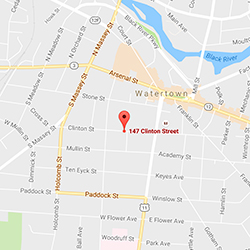
About

At H.D. Goodale, we pride ourselves on our professional service and personal attention. What does this mean for you? It means our knowledgeable agents are here for you.
When you stop by our office during business hours, we’re there to greet you, answer your questions, and address your concerns. When you call us during business hours, we actually answer the phone. No struggling through automated menus trying to reach a real person; no long waits to speak with us. And when you call us outside of business hours or send us an email, we’ll get back to you as soon as we can—usually within 1 business day.
Fix did not look at the state of things in the same light. The storm greatly pleased him. His satisfaction would have been complete had the Rangoon been forced to retreat before the violence of wind and waves. Each delay filled him with hope, for it became more and more probable that Fogg would be obliged to remain some days at Hong Kong; and now the heavens themselves became his allies, with the gusts and squalls. It mattered not that they made him sea-sick—he made no account of this inconvenience; and, whilst his body was writhing under their effects, his spirit bounded with hopeful exultation.
Passepartout was enraged beyond expression by the unpropitious weather. Everything had gone so well till now! Earth and sea had seemed to be at his master’s service; steamers and railways obeyed him; wind and steam united to speed his journey. Had the hour of adversity come? Passepartout was as much excited as if the twenty thousand pounds were to come from his own pocket. The storm exasperated him, the gale made him furious, and he longed to lash the obstinate sea into obedience. Poor fellow! Fix carefully concealed from him his own satisfaction, for, had he betrayed it, Passepartout could scarcely have restrained himself from personal violence.
Passepartout remained on deck as long as the tempest lasted, being unable to remain quiet below, and taking it into his head to aid the progress of the ship by lending a hand with the crew. He overwhelmed the captain, officers, and sailors, who could not help laughing at his impatience, with all sorts of questions. He wanted to know exactly how long the storm was going to last; whereupon he was referred to the barometer, which seemed to have no intention of rising. Passepartout shook it, but with no perceptible effect; for neither shaking nor maledictions could prevail upon it to change its mind.
On the 4th, however, the sea became more calm, and the storm lessened its violence; the wind veered southward, and was once more favourable. Passepartout cleared up with the weather. Some of the sails were unfurled, and the Rangoon resumed its most rapid speed. The time lost could not, however, be regained. Land was not signalled until five o’clock on the morning of the 6th; the steamer was due on the 5th. Phileas Fogg was twenty-four hours behind-hand, and the Yokohama steamer would, of course, be missed.
The pilot went on board at six, and took his place on the bridge, to guide the Rangoon through the channels to the port of Hong Kong. Passepartout longed to ask him if the steamer had left for Yokohama; but he dared not, for he wished to preserve the spark of hope, which still remained till the last moment. He had confided his anxiety to Fix who—the sly rascal!—tried to console him by saying that Mr. Fogg would be in time if he took the next boat; but this only put Passepartout in a passion.